Dollars on the shelf, dinars in the drawer: how to price and book
Why an Iraqi shop's books stay in dinars even when the shelf is priced in dollars, how to handle the daily rate and the gap between sale and collection.
The Dashing team4 min read
In mobile, electronics, gold and spare-parts shops the customer asks "how much in dollars?" and pays in dinars at the day's rate. That is normal in Iraq and needs no justification. What needs thought is the books: if you record a sale in dollars one time and in dinars the next, you will not know your profit at the end of the month, and the accountant will ask a question with no answer, "at which exchange rate?". This article explains the rule, then says exactly what Dashing (داشنك) does and does not do.
The rule: one currency for the books
Books are kept in one currency, in Iraq the dinar, because an income statement and a balance sheet cannot be added up in two currencies. Everything in dollars is converted to dinars at the rate of the day of the transaction and fixed there. This is not an opinion; it is the only way the profit number stays comparable month to month and the balance sheet stays readable.
The common mistake: pricing stock in dollars in the books "because we buy in dollars", then recording sales in dinars. The result is a margin that moves with the exchange rate rather than with your trade, and no way to tell trading profit from exchange profit (or loss).
Three exchange rates you must keep apart
- The official rate: 1,300 dinars to the dollar since February 2023, the basis of the 2026 budget; used in official and bank dealings.
- The parallel market rate: what you actually buy and sell at in the exchange shops, changing daily and drifting from the official rate when demand rises.
- Your rate: the rate you announce in your shop to the customer, usually the market rate rounded for simplicity.
The books use the third: the rate at which the transaction actually happened. Record nothing at the official rate unless you actually dealt at it.
What Dashing does
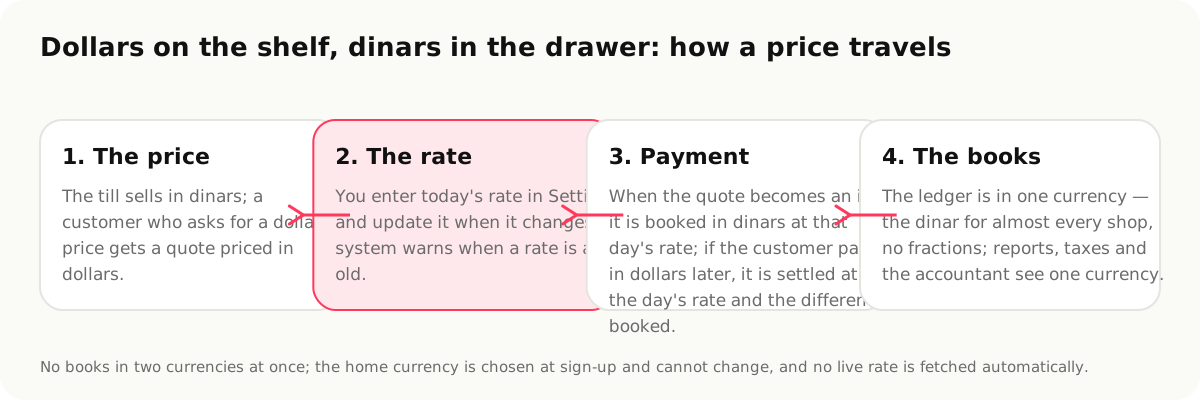
- The books are in one home currency chosen at sign-up and never changed: whole dinars, no fractions, for almost every shop, or dollars for a company that operates in them. The cashier screen sells in the home currency.
- Multi-currency from Settings: turn on "Enable multi-currency", pick the dollar under "Accepted currencies", and enter today's rate in the "Exchange rates" table. You enter the rate and update it when it changes; the system does not fetch a rate from the internet, and it warns you when a week has passed since the last update.
- A quote in dollars: from the quotes screen you pick the currency "USD" and the quote is written in dollars the way the customer wants. When they accept and the quote becomes an invoice, the invoice is booked in dinars at that day's rate, and the rate is kept on the invoice.
- Collecting in dollars later: if the customer pays a credit invoice in dollars two weeks later, the invoice is settled from its page at that day's rate, and the difference between the two rates is booked automatically as an exchange gain or loss, not as sales and not as cost.
What Dashing does not do
- It does not show each item's price in dollars on the cashier screen or the receipt; dollar pricing goes through a quote.
- No books in two currencies at once: the home currency is one, and if you pick the dollar at sign-up you cannot come back to the dinar later.
- It does not fetch the exchange rate automatically and does not show the market rate.
- It does not accept dollars as a tender on the fast cashier: a customer paying in dollars has the amount converted to dinars at your rate and recorded as cash in dinars.
A practical routine for a shop that prices in dollars
- Every morning the rate changes: update today's rate in Settings (one minute).
- The shelf: write the dollar price and the dinar price at today's rate if you like, or the dollar alone.
- A cash sale: enter the dinar price at the till (dollars × your rate, rounded to the nearest 250).
- A credit sale to a customer who wants to commit in dollars: a quote in dollars → invoice → collection in dollars at the day's rate.
- Month end: open the income statement; trading profit on its line, exchange gain/loss on its own.
Sources
- Shafaq News, Iraq fixes the 2026 budget at 1,300 dinars per dollar, https://shafaq.com/en/Economy/Iraq-fixes-2026-budget-at-1-300-dinars-per-dollar (accessed 2026-09-14)
- Jummar, on the gap between the official and parallel rates (July 2024), https://jummar.media/en/5622
- Multi-currency in Dashing, https://dashing.krd/en/features/accounting (2026-09-14)
This article is also available in العربية
In the product
- AccountingAccounting software for shops in Iraq: double entry that writes itself
- ElectronicsElectronics shop software: serials, installments, dollar quotes
- Mobile phone shopsMobile shop software: IMEI, repairs and installments
- Gold & jewelleryGold shop software: by the gram, dollar quotes, installments